
Tanglewilde, Lacey
Garage Door Work in Tanglewilde
Tanglewilde is a tight 2,503-household pocket of 1970s-era homes a mile from our Lacey shop. We know the hardware that era shipped with and what it needs now.
Popular Services
Doing It Yourself
Tanglewilde is a small place - 2,503 households, most of them built around 1976. That matters more than it sounds like it should. A neighborhood this size and this age tends to have the same door hardware showing up over and over, which means the same mistakes show up over and over too.
Owner self re-tensioning mistake
The common one: an owner hears a bang or sees a cable off the drum and decides to just re-tension the spring themselves. On a 1976-built door, that spring is usually a single torsion unit rated for a lighter sectional door than what's actually hanging on it now, especially if the original door was swapped for a heavier insulated one at some point.
Wrong winding causes injuries
Winding it wrong under that mismatch is how people end up in the ER, not the garage. What's actually fine to do yourself: tightening loose hinge bolts, clearing track debris, lubricating rollers, checking that the photo-eye sensors are aligned and not just flashing at each other through dust. None of that needs a truck.
Deferred maintenance, not emergency
Springs, cables, and anything involving the torsion bar do. We're honest that a lot of these calls are not emergencies - they're deferred maintenance that finally caught up. If your door is loud but still opens and closes square, it can usually wait for a scheduled visit rather than a same-day one.
Stocked Parts
Housing in this part of the service area went up mostly between 1965 and 2004, with the bulk of it, including Tanglewilde, landing in the late 1970s through the 1990s.
Era-specific hardware window
That's a specific window of hardware: steel sectional doors on torsion springs, openers from a handful of manufacturers that dominated residential construction through that stretch, and track hardware sized for lighter doors than what gets installed today.
Truck carries era-correct parts
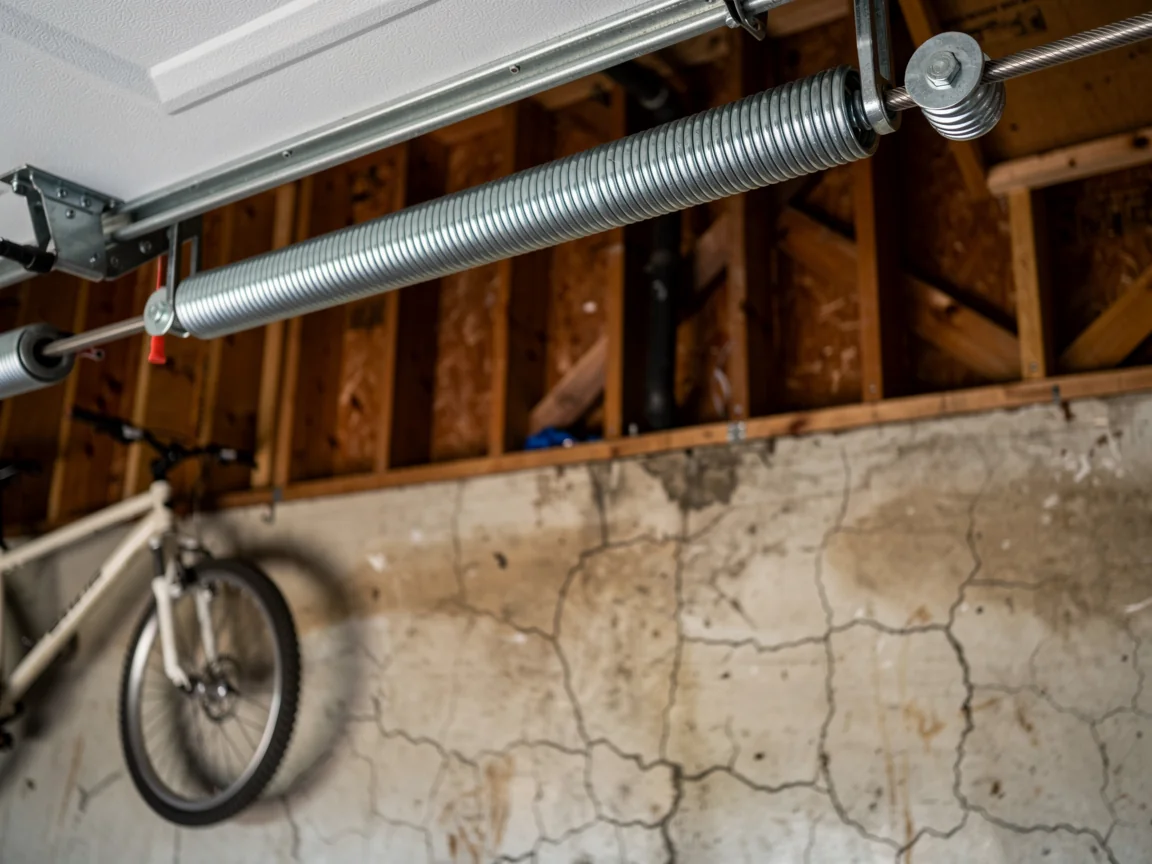
Because that era repeats across so many of the neighborhoods we cover, the truck carries torsion springs in the wind and wire sizes that era actually used, along with the drums, cables, and rollers that wear out on doors of that age. We're not guessing at what's behind a Tanglewilde garage door before we open it - the build year already tells us most of it.
Custom panels need orders
Where we come up short is anything genuinely custom: a door that was replaced more recently with an odd-size insulated panel, or an opener from a manufacturer that didn't have much market share here. Those sometimes mean a parts order and a second trip, and we'll tell you that up front rather than pretend otherwise.
How It Shows Up
On a door built around 1976, the failure pattern is predictable. The spring goes first, usually announced by a loud crack and a door that won't budge or that slams down instead of lowering.
Second opener failures typical
Next most common is the opener - the original units from that construction era have long since been replaced once already, so what fails now is often the second or third opener in that bay, with worn drive gears or a capacitor that's given out.
Seized roller wears cable
Cables fraying at the bottom bracket show up more than you'd expect, usually from a roller that seized years ago and nobody noticed until the cable started riding wrong.
Undersized springs on heavier doors
And because a fair number of these houses have had a single door swapped for a heavier insulated one without the spring being re-rated, undersized springs straining to lift an oversized door is a pattern we see specifically in this stretch of homes. What we don't see much of here: brand-new door failures. The housing stock is old enough that most of what breaks is wear, not manufacturing defect.
Why This Fails Locally
The region sits in a mild climate band with occasional freeze, not the deep-freeze cycling that cracks seals further inland, but enough cold mornings each winter to stiffen grease and shrink metal just slightly on a door that's already decades old. On a 1976-built garage, that's enough to turn a quiet roller into a grinding one almost overnight once the weather turns.
It's not dramatic weather damage - nobody's garage door is failing from a single storm. It's cumulative: thirty-plus winters of that freeze-thaw swing working on hardware that was never upgraded, springs that have lost a bit of tension every cold snap, and openers whose gears have hardened and worn under the same cycle. A door built in 2015 in the same spot wouldn't show this yet. A door built in 1976 already has.
The honest limit here: we can't tell you a door is original to 1976 just by looking at it, and we won't guess. What we can tell you is that the symptoms match what hardware that age typically does under this climate, and that's usually enough to know what to bring on the truck.
What You Pay
We don't have a published price list for Tanglewilde specifically, and we're not going to invent one here.
Owners pick insulated panels
What we can say is that median household income in this pocket runs around $99,766, noticeably higher than some of the areas we cover, and in practice that shows up as more owners choosing a full insulated panel replacement over patching a cracked one, and more requests for better-sealed, heavier doors than the originals.
Heavier doors need spring upgrades
That shift changes the job, not just the invoice. A heavier insulated door usually means a spring upgrade too, since the original torsion spring sized for a 1976-era lightweight door won't lift the new one safely. So a "replace one panel" call sometimes turns into a spring conversation once we're actually looking at it.
Quote before any work
We'll always quote the job in front of you before touching anything, and if a repair doesn't make sense against the cost of replacement - which happens more on doors this old - we'll say so instead of running the meter on a fix that won't hold.
Time on the Job
Tanglewilde sits about a mile from our shop in Lacey, which keeps drive time out of the equation for most of what we do here - it's one of the closer stops on the schedule. What actually sets the clock is the hardware once we're in the garage.
A spring swap on a door from this era is usually a same-visit job once we've confirmed the wind and wire size match what's on hand, which is often the case given how common that build year is across the area. Opener replacements take longer if the mounting bracket or rail doesn't match current standard lengths - not unusual on a 1976 garage that's never been remodeled.
What takes real time, and what we won't rush, is anything where the door has been modified from original - a heavier panel added without a spring upgrade, or an opener mounted on hardware that was never meant to carry it. Those get diagnosed properly before anything gets touched, even if that means a longer visit than a straightforward repair would.
Questions
Common questions
Do you have a crew based in Tanglewilde?
No. Tanglewilde is covered from our Lacey shop, about a mile away. We don't operate a separate branch or depot in Tanglewilde, so any job here is dispatched from Lacey rather than a local crew.
Why does my 1970s opener keep failing even after I replace it?
If the original opener from that era has already been swapped once, the mounting bracket and rail are often the originals too. A new opener bolted onto worn original hardware can fail early. Worth having the bracket and rail checked, not just the opener unit.
Is it worth repairing an old torsion spring or replacing the whole door?
Depends on the door. If the panels are sound and it's just the spring, repair makes sense. If the door's been patched before or doesn't match current insulated panels, replacement often costs less over time than repeated spring work on an old mismatched door.
Does the cold affect garage doors here?
The area sits in a mild climate band with occasional freeze, not severe winters. But decades of that freeze-thaw cycle still stiffen grease and wear gears faster on older hardware, which is part of why doors built in the 1970s and 80s tend to need more attention now.
Explore more
More Services in Tanglewilde
Maintenance
Tanglewilde homes mostly date to the mid-1970s, a decade older than the wider Lacey service area. Learn more →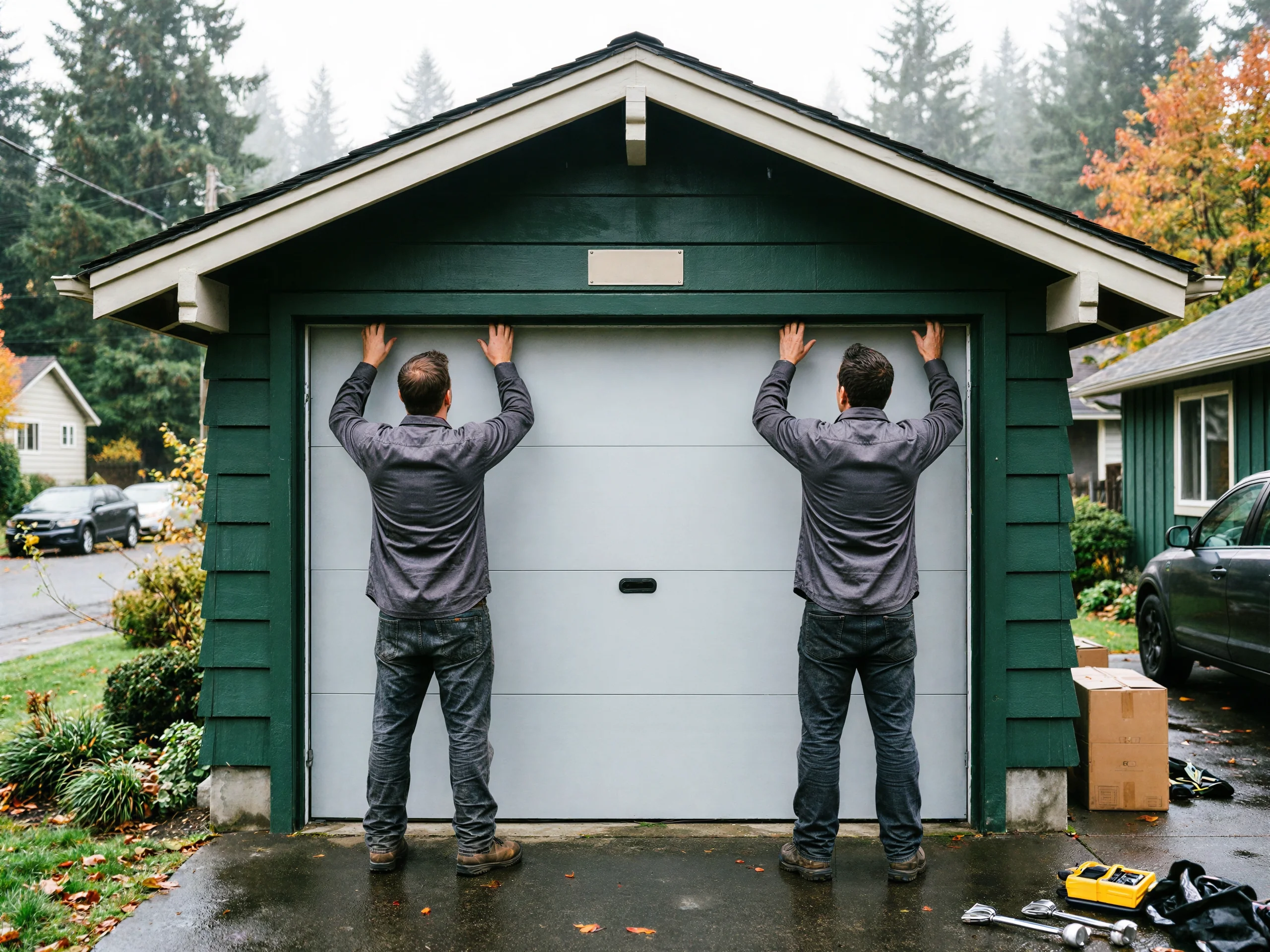
New Door Installation
Garage door installation for Tanglewilde, WA homes built around 1976, a mile from Lacey. Learn more →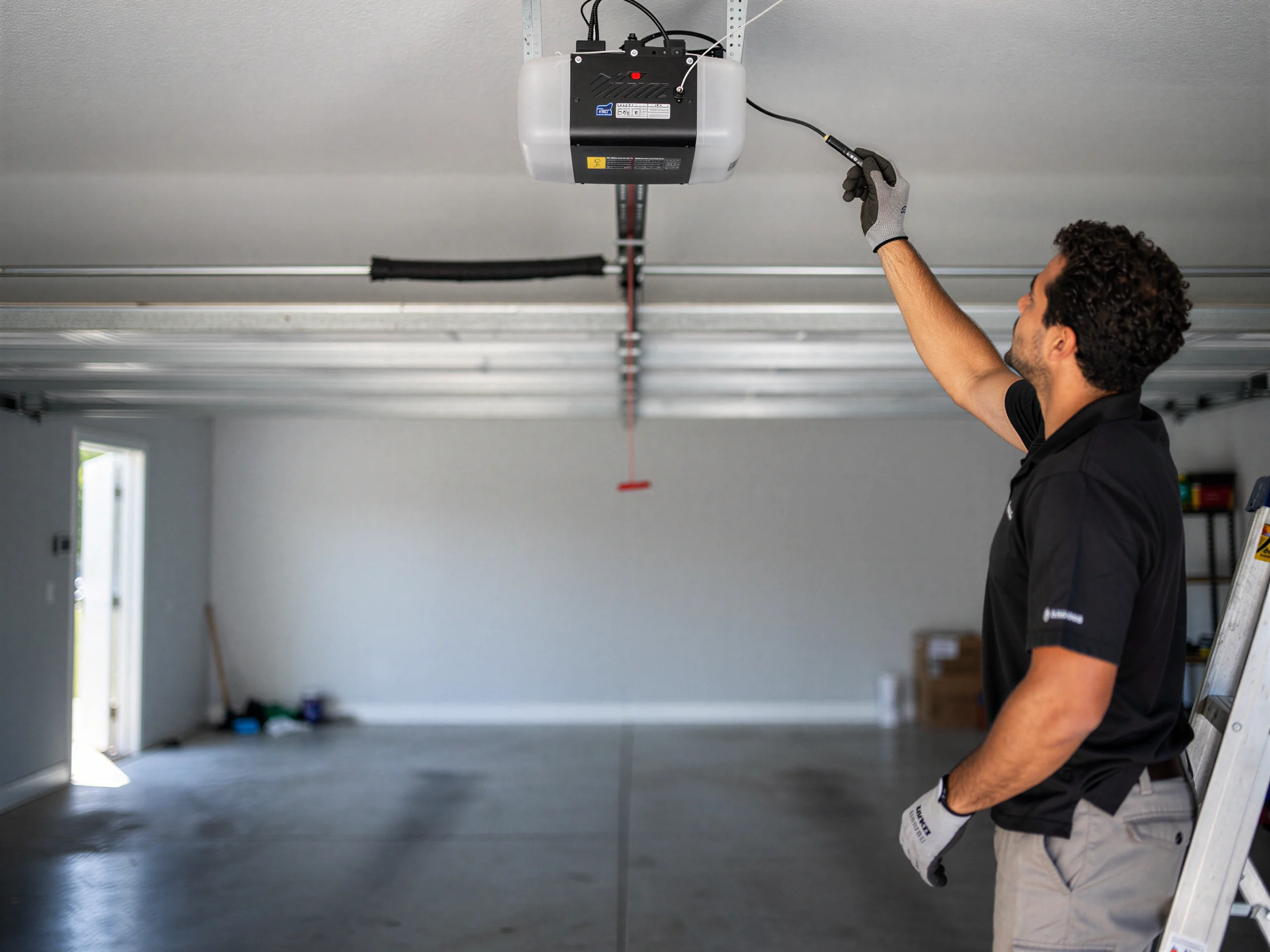
Opener Repair
Tanglewilde homes mostly date to 1976, a decade before the service area's 1980s-90s norm. Learn more →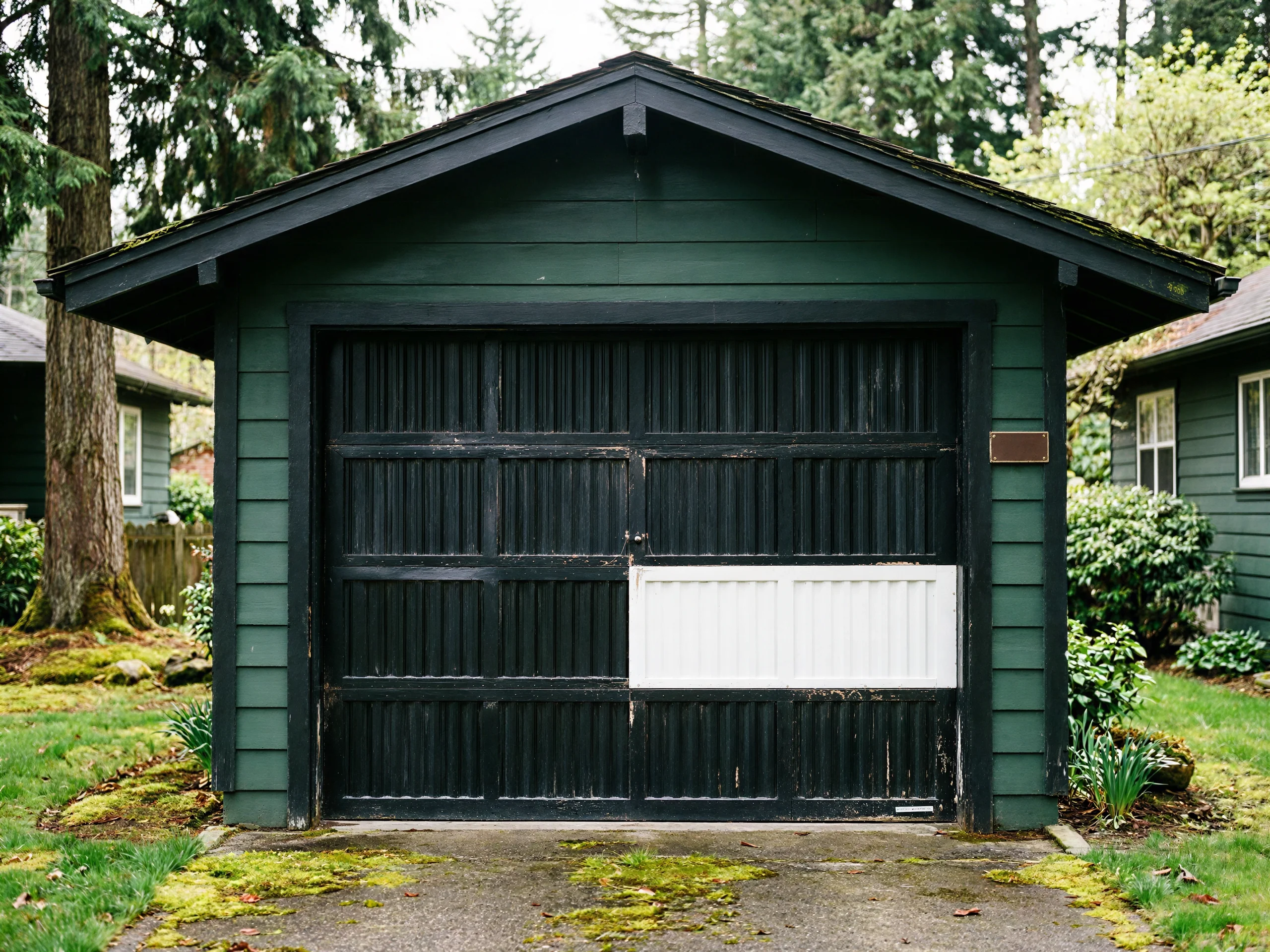
Panel Replacement
Tanglewilde's garage doors mostly date to the mid-1970s, a different panel width and gauge than newer stock. Learn more →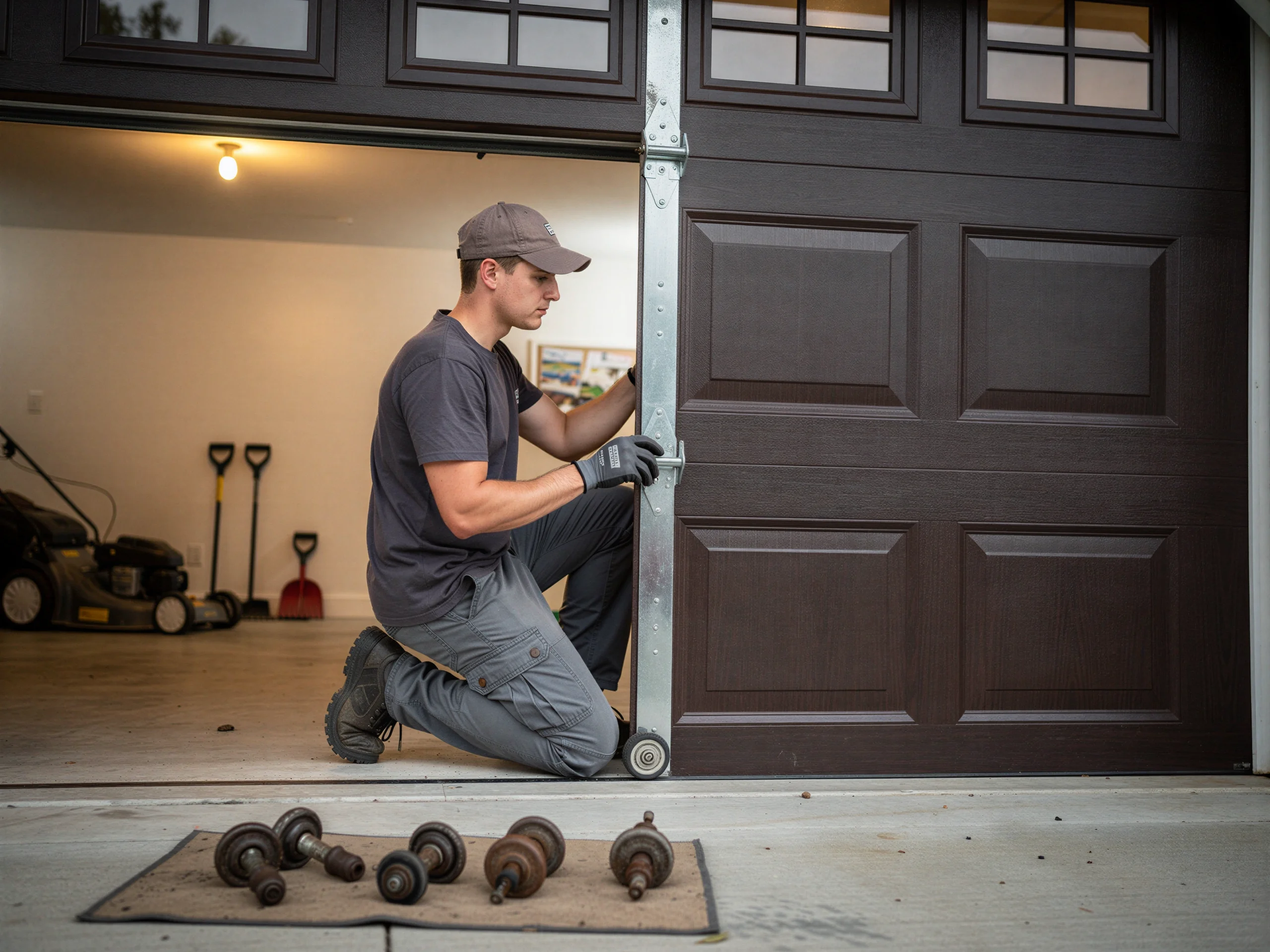
Roller Replacement
Tanglewilde homes near Lacey, WA, built around 1976 still run original steel rollers on steel track - here's what wears and what replacing them involves. Learn more →Ready when you are
Need garage door service in Tanglewilde?
Lacey Garage Door Pros repairs and installs garage doors, springs and openers in Lacey, WA and the surrounding area.